Fade guide · Updated 2026-10-12
The Low Taper Fade on Straight Hair
A low taper fade on straight hair works, and it is one of the most requested cuts in any shop right now, but it behaves differently from the version you see on dark, curly or coarse hair. Straight hair lies flat, shows every line and sticks out above the ear when it carries bulk, so the taper reads softer and the cut depends far more on how much weight is taken out. Get the bulk right and a low taper on straight hair looks clean, natural and easy to wear.
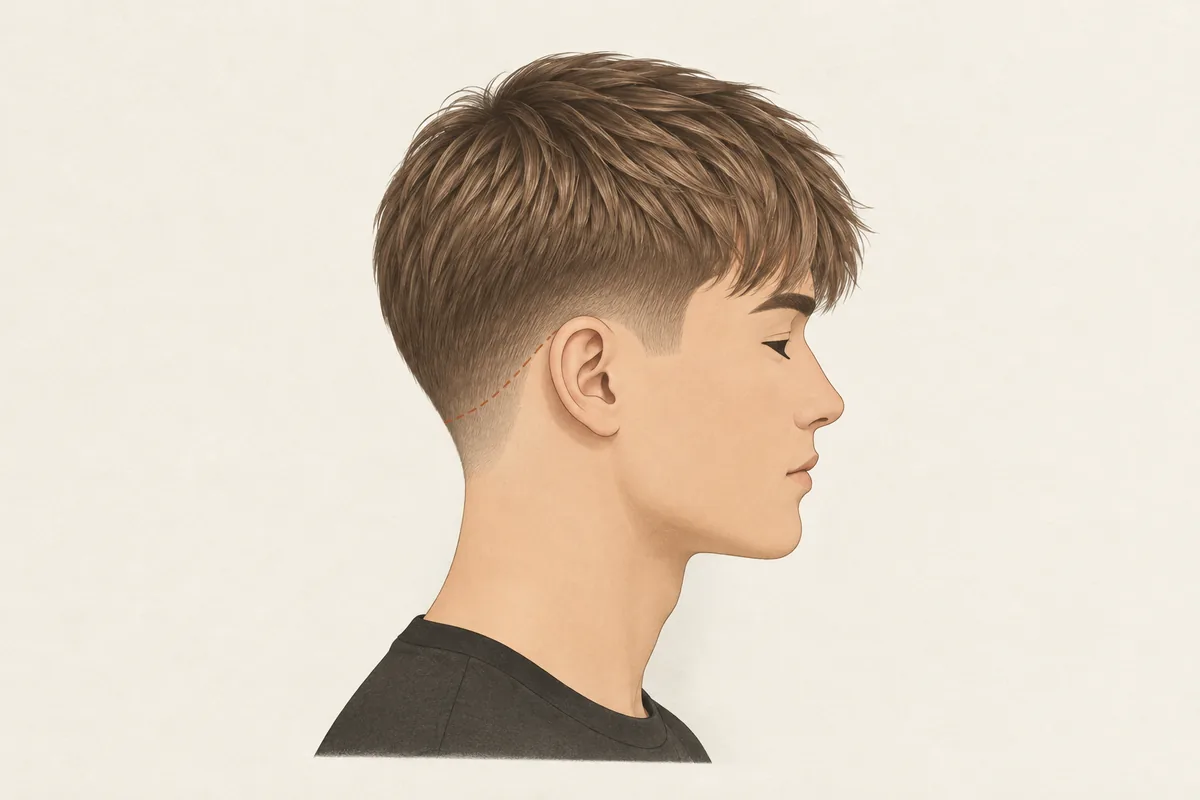
Is a low taper good for straight hair?
Yes. Because the taper stays in the last inch, straight hair keeps the length and flow on the sides and top that it needs to lie well. It is a better match than a high fade or a skin fade climbing up the head, which exposes the flat sides and makes the top look like a mushroom.
What changes is the contrast. On dark, thick hair the taper pops. On straight, light or fine hair it reads softer, and barbers tell blonde clients up front that the clean taper will not look as sharp as the photo. That is a property of the hair, not a mistake.
And most people that ask for a cut like this don't have dark, dense, or coarse hair!
Why straight hair is harder to taper
- It shows every line. Curly hair hides small steps between guard lengths. Straight hair lies flat and exposes them, so the blend has to be softer.
- It sticks out. Cut to an in-between length above the ear, straight hair stands away from the head and forms a shelf over the taper. Removing weight fixes it, cutting shorter usually does not.
- Bulk. Most clients asking for this have not had a haircut in months and want nothing taken off the top or the sides. All that weight has to go somewhere.
- Height. Take the taper too high and the cut stops being low. The temptation on bulky hair is to climb, and that is exactly what ruins it.
How barbers cut a low taper on straight hair
The consensus from working barbers on thick straight hair is to debulk first and taper second.
I grab my clipper comb and bust out as much bulk as I need at the bottom of the nape and at the temples. Then, just try and keep the tapers as low as possible while still making them stand out. After that, some blending sheers to remove weight.
- Debulk the sides. Clipper over comb at the nape and temples, or a longer guard such as a 4 on the sides, so the hair is long enough to tie into the top but no longer bulky. Another method: clip the top up, part from the arch at about 45 degrees and take the bulk out with a #2 guard or a detachable blade underneath.
- Taper low, with fewer steps. The guideline and blend follow the usual low taper sequence. On straight hair many barbers go from a bald line straight to a 1.5 into a 3 and skip the 2 entirely, because every extra step is one more line flat hair will show.
- Blend softly. Flick out each pass and erase the steps with clipper over comb. Clippers with a smooth, adjustable lever make this part much easier.
- Take weight out. Run thinning shears built for removing bulk through the sides and the top so the hair falls flat over the taper instead of standing out.
- Shape the top and detail. Point cut the top for texture, then clean the neckline, sideburns and ears with a precise outliner.
What to ask your barber for
Say "low taper, keep the length on the sides and on top, take the bulk out." Add how low you want it, at the ear or just above, whether you want skin at the edge, and bring a photo of someone with hair like yours. A reference with dark, curly hair will set expectations your straight hair cannot meet. If your hair is fine or light, ask for the edge to stop at a closed lever rather than skin.
Best low taper hairstyles for straight hair
Most Pinterest boards of ideas about low taper cuts and most YouTube tutorials show textured hair, so it helps to know which looks translate. The taper creates the frame; the hair on top decides the style. A taper around the ears gradually shortening into the neckline, keeping the sides sharp while the length on top stays, is easy to maintain and works with all of these. Point cutting a light layer into the top adds volume and natural texture, the modern touch that stops straight hair looking flat. Less dramatic than a high fade, more trendy than a plain taper haircut:
- Textured fringe. The most popular pairing. The front is left long and point cut into a choppy textured fringe dropped onto the forehead. Our textured fringe guide covers how to ask for the front. A messy fringe is the same cut worn rougher.
- Middle part. Straight hair falls into curtains easily. Leave the top around eyebrow length and let the length flow either side of the part.
- Textured crop. Shorter on top, choppy and pushed forward. The lowest maintenance option, and a good one for thick straight hair.
- Blowout. Straight hair needs a blow dryer and product to get the volume, but it holds well once set. See the blowout taper guide for the drying method.
- Slick back or pompadour. Longer on top, swept back with pomade. The low taper keeps it neat at the sides without the hard contrast of an undercut.
- Long hair flow. A low taper on long hair, cleaned only at the neckline and around the ear, keeps the length while looking groomed.
Thick vs thin straight hair
Density changes the cut more than anything else on straight hair, so tell your barber which one you have.
- Thick straight hair. This is where all the problems above come from, and also where the cut looks fullest once debulked. Expect the barber to spend more time removing weight than tapering. Ask for the sides left long enough to lie flat, around a 4, with thinning shears through the top so it does not puff up.
- Thin or fine straight hair. Easier to taper, but the scalp shows sooner. Keep the taper low, stop the edge at a closed lever instead of skin, and skip heavy debulking, since there is little weight to remove. Texture on top with a matte product rather than gel, which clumps fine hair and shows gaps.
- Wavy hair. Sits between the two. Leave a little more length on the sides and top so the wave has room, and expect the taper to read slightly sharper than on poker-straight hair.
- Blonde or light hair. The taper barely contrasts with the scalp, so it looks softer at any density. A slightly longer, more gradual blend looks better than chasing a sharp skin line.
Styling a low taper on straight hair
Straight hair rewards a little effort. Towel dry, spray a sea salt or texture spray at the roots, then blow dry in the direction you want the style to sit. Finish with a pea-sized amount of matte clay or paste to add texture and hold. The result is a polished appearance that still looks like messy hair on purpose, versatile enough for school, work or professional settings.
Face shapes
Because a low taper keeps width at the sides, it suits most face shapes. On straight hair the top does the balancing, since it falls flat unless you style it up.
- Round face. Add height: a textured quiff or a blowout on top, and keep the sides tight to the head so they do not add width.
- Long or oblong face. A fringe or a middle part brings the length down onto the forehead and shortens the face visually. Avoid tall volume on top.
- Square face. Almost any style works. A textured crop or a messy fringe softens a strong jaw.
- Oval face. The easiest shape. Pick the style that suits your hair density rather than your face.
- Heart or diamond face. Keep some length at the sides and over the forehead, such as curtains or a soft fringe, so the narrow chin is not exaggerated.
Maintenance
The taper itself blurs in two to three weeks, faster on dark hair where the contrast shows. Book barber visits every two to four weeks, or ask for a neckline and taper clean-up in between. The top can go longer, which is why this is considered a low-maintenance look.
Frequently asked
Is a low taper fade good for straight hair?
Yes. It keeps the length straight hair needs on the sides and top while cleaning up the edges. Expect a softer look than on curly or dark hair.
Why does my low taper look puffy on straight hair?
The sides still carry bulk. The hair above the taper needs to be debulked with clipper over comb or thinning shears so it lies flat instead of sticking out.
Can I get a middle part with a low taper?
Yes, it is one of the best styles on straight hair. Keep the top around eyebrow length and the sides long enough to blend into it.
Low taper or mid taper for straight hair?
Low is usually safer. A mid taper climbs higher and exposes more of the flat side, which suits shorter styles on top but can make long straight hair look disconnected.
How often should I get it cut?
Every two to four weeks for a crisp taper. The top can be left longer between cuts.
Straight hair is not the problem; bulk is. Ask for the weight to come out first, keep the taper low, and the cut looks the way you pictured. Barbers are still swapping methods for exactly this client on the r/Barber thread on low tapers with bulk.