Haircut guide · Updated 2026-10-12
The Ivy League Haircut, Explained
The Ivy League haircut is a classic men’s cut with short, tapered sides and back and a top left just long enough to part and comb to the side, longest at the front and shorter toward the crown. It is essentially a crew cut grown out far enough to style. Barbers have been cutting it for generations, which is exactly why clients who ask for it by name sometimes get a blank stare: the name is old, the haircut is everywhere.
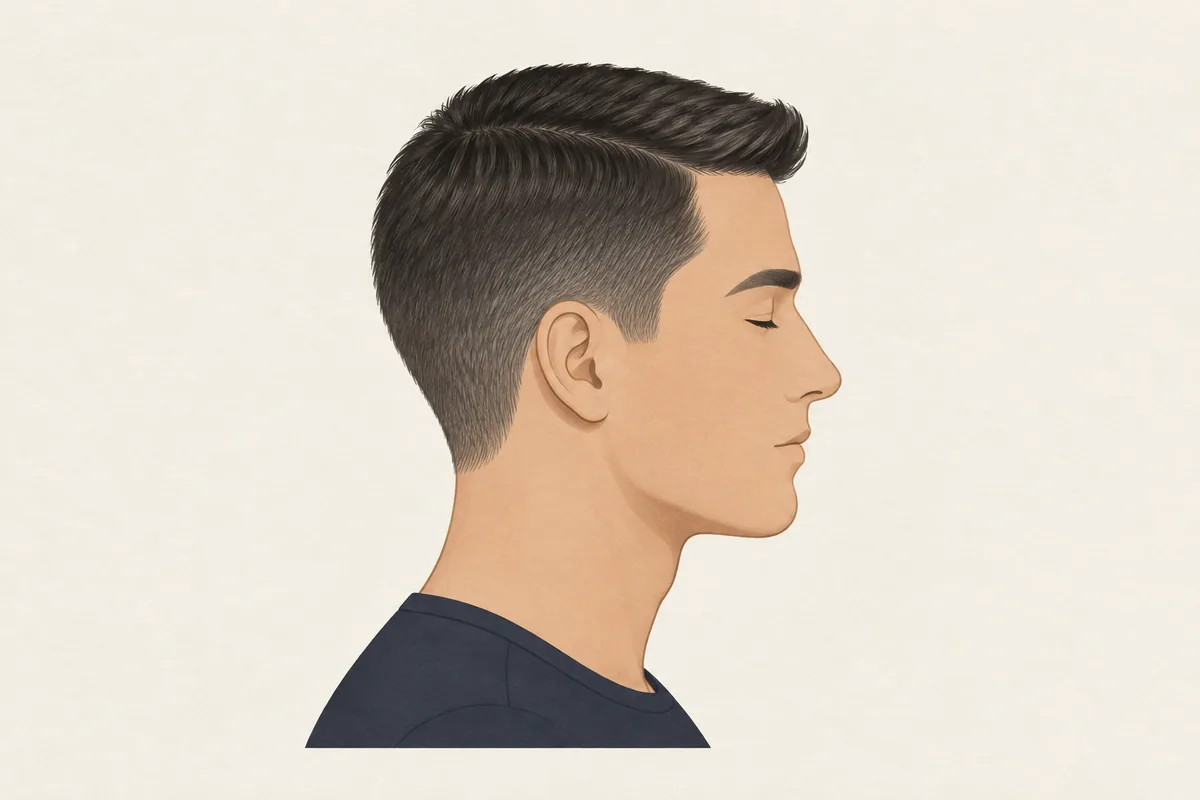
What is an Ivy League haircut?
Strip away the prestige in the name and an Ivy League haircut is a short back and sides with a side part. The top is cut with scissors, usually an inch to two inches at the front, and graduated shorter toward the crown so it lies flat when combed. The sides and back are tapered with clippers from short at the neckline to longer near the top, typically no skin and no high contrast. The result is a neat, rounded silhouette that looks the same on a student, a young professional or a grandfather. It is a haircut built on clean lines rather than tricks: a neat yet approachable look that has been a symbol of refined taste for decades, and a hairstyle a man can wear to an interview and to the beach without changing a thing.
An Ivy League is a very traditional barber haircut that's been worn by guys for generations, you probably saw 10 on the street last week. Basically, the top is short, but left just long enough to style a little bit.
You will also hear it called a Harvard clip or a Princeton. All three names point to the same idea: a clean, practical cut that still lets a man comb his hair into a part.
Where the Ivy League cut came from
The cut is said to originate at the prestigious Ivy League universities in the northeastern United States, among them Harvard, Yale and Princeton, where students wore it widely in the 1950s and 1960s alongside the rest of the Ivy Style wardrobe of oxford shirts and chinos. The crew cut, originally associated with rowing crews, was the default short haircut of the era; the Ivy League kept that tidy shape but left enough length on top to comb, which read as more grown-up and less military. Hollywood leading men and politicians of the period, John F. Kennedy the most cited example, helped turn it into the shorthand for a polished and put-together look, and that old Hollywood association is why it still signals timeless elegance today.
Ivy League vs crew cut and other classics
- Against a crew cut. Both have short tapered sides and a top that is longest at the front. A crew cut is shorter on top, often a clipper guard or a short flat-ish scissor cut, and is not meant to be parted. The Ivy League keeps the hair longer, enough for a neat side part.
- Against a side part or comb over. A modern comb over usually has a fade or a skin taper and much more length on top. The classic Ivy League is shorter, softer and tapered rather than faded.
- Against a buzz cut. A buzz cut is one clipper length all over. If you like the low effort but want a part, an inch-long 8 guard buzz all over is the closest no-styling relative.
- Against the high and tight. The military cousin takes the sides very short or to skin with a hard contrast; the high and tight keeps only a patch on top. The Ivy League is the civilian, softer version.
How to ask your barber for an Ivy League haircut
The name alone is not a reliable instruction. When you ask for an Ivy League, some barbers know it instantly, others have never been asked for it, and every barbershop or stylist interprets the top length slightly differently. Bring a photo, and describe the hair length you want in these four points:
- Top length. Say how much length on top you want, for example "about two inches at the front, shorter toward the crown, enough to part." Point to your forehead to show where the front should fall when combed.
- The part. Natural side part, a deep side part, or a shaved hard part. Your barber can find your natural part from your cowlick if you are not sure.
- The sides and back. Ask for the sides and back tapered, and give a starting clipper guard, a 2 or a 3 is a common classic starting point. If you want more contrast, ask for a low taper fade that stays down at the ears and neckline or a low fade, but say "no skin" if you want the classic version.
- Finish. Squared or tapered neckline, and whether you want it styled with product or left natural.
I see haircut names as just a conversation starter in a consultation. It's an opener that gets the client and I in the same basic ballpark, but I'm always going to have clarifying questions.
How barbers cut it
The craft is in the top. The sides are tapered with clippers, starting short at the hairline and working up through longer guards or clipper over comb so the head keeps its rounded shape. The top is cut with scissors, scissor over comb or between the fingers, longest at the front and graduated shorter toward the crown so it combs flat without sticking up. The barber then connects the corners so there is no shelf, cleans the neckline, ears and sideburns with a sharp outlining trimmer, and checks the cut while the hair is combed into its part. On thick hair, a few passes with thinning shears to remove bulk on top help the top lie down.
Ivy League haircut variations
The best Ivy League haircut styles share the same classic shape and differ in the details, which is what makes it work as both a classic and modern cut. Every version features short, neatly trimmed sides and longer hair on top; what changes is how the sides are finished and how the top is worn. Here are the common takes on the cut:
- The classic ivy league. Short sides with a soft taper, a classic side part, a small amount of pomade. The classic style, and the perfect Ivy League for an office.
- With a low fade. A modern touch: the sides go shorter at the bottom while the top stays classic. Ask for a low fade or a skin fade at the very bottom if you want sharper contrast.
- With a hard part. A shaved line along the part. Crisp, but it grows out within a couple of weeks.
- Textured or messy. The same cut worn without a part, the top pushed forward or tousled with a matte product. More relaxed.
- Longer, with a quiff. Slightly longer at the front and blown up and back, closer to a short pompadour.
How to style an Ivy League haircut
Styling takes a couple of minutes. Start with towel-dried hair, apply a small amount of pomade, cream or light paste, and comb the hair across the forehead into your part with the front side-swept. Water-based pomade gives the classic shine; a matte cream or clay looks more modern. For volume at the front, blow-dry it up and over before combing. To style an Ivy League haircut down for the weekend, skip the comb, use a little texture spray and push it forward with your fingers.
Hair type and face shape
The ivy league haircut offers one of the widest ranges of fit of any short cut, which is why it is called a timeless choice. Because the Ivy League leaves enough length to work with, a barber can tailor it to suit a variety of hair types. The style looks sharpest on dark hair, where the taper shows clearly, but works on any colour. A few notes by hair type:
- Straight hair. The easiest match. It combs into a clean part and holds with very little product.
- Wavy hair. Works well and gains natural texture on top; leave the top slightly longer so the wave has room.
- Thick hair. Needs the top debulked or it puffs up instead of lying flat.
- Fine hair. Keep the top shorter, since longer fine hair separates and shows the scalp at the part.
- Curly hair. Possible, from straight to curly, but expect a softer, less defined part.
On face shape, the cut suits oval and square faces best, and the height at the front lengthens a round face. A long face does better with the front kept lower and the sides a touch fuller.
Maintenance
To keep the shape, see your barber every three to five weeks. The sides lose their taper first and the top starts covering the forehead around week four. Between visits, a trim at the neckline keeps it neat. To groom it daily, all a man needs is a comb and a pea-sized amount of hair products, with the hair combed into place while still slightly damp. Compared with most modern hairstyles, that is very little work for a cut that always looks deliberate.
Frequently asked questions
What is an Ivy League haircut for men?
A classic short cut with tapered sides and back and a top long enough to part, longest at the front. It is a crew cut grown out just enough to comb into a neat side part.
What is the difference between an Ivy League and a crew cut?
Length on top. The crew cut is shorter and usually unparted. The Ivy League keeps the top hair longer at the front, usually one to two inches, so it can be combed and parted.
Is the Ivy League haircut a taper or a fade?
Traditionally a taper, with no skin. Modern versions often add a low fade, so specify a taper or fade when you ask your barber.
Is an Ivy League haircut good for an oval face?
Yes. Oval faces suit almost any length and part, so this is one of the easiest matches.
What products work best?
A water-based pomade for a classic shine, or a matte cream or clay for a modern finish. Use a small amount, worked through towel-dried hair before combing.
The Ivy League has survived seventy years of trends because it asks very little of you and works on almost everyone. Learn the four things to tell your barber and the name stops mattering. Barbers are still debating what clients mean by it on the r/Barber Ivy League thread.