Gear ranking · Updated 2026-09-13
The Best Thinning Shears, and the Shear Barbers Thin With
Thinning shears are a blending tool, not a crutch, and barbers are blunt about the difference. The five best pairs below: a sensible pro pair, the VG-10 upgrade worth resharpening, a three-shear set covering every ratio, a cheap starter kit, and a ten-dollar pair to learn on.
The ranking at a glance
Prices are approximate and move around. Hit "Check Price" for the current number.
I never ever thin the top near the scalp. It makes a mess as it grows back in.
The five, one by one
- TeethSerrated edge, 5.5 inch
- SteelForged special steel, German
- Good forOne pro pair, daily blending
Jaguar
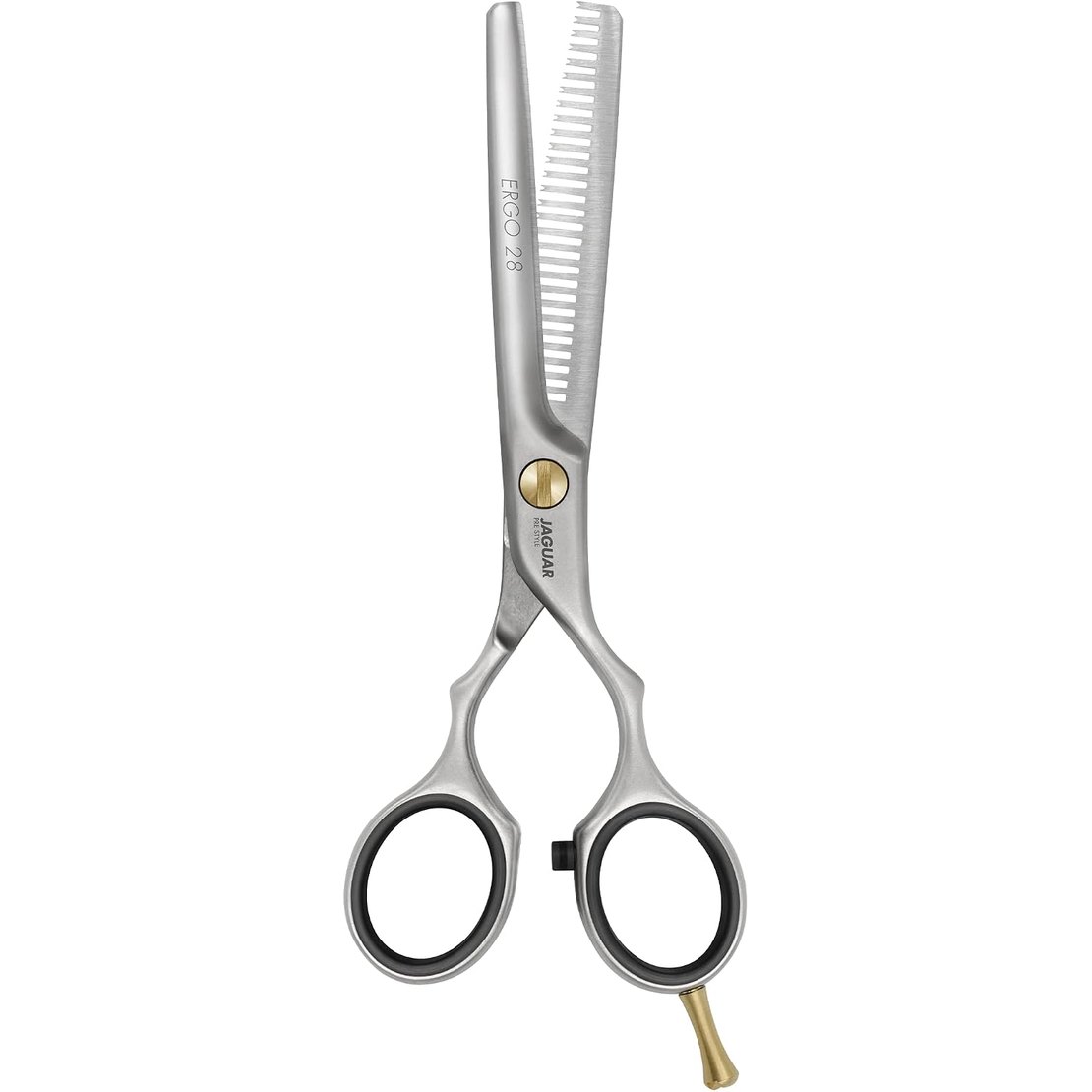
Jaguar Ergo Thinning 5.5"
The sensible pro pair. German forged, no gimmicks, holds its edge.
Jaguar is what barbers buy when they stop arguing about badges. Forged special steel, sold on an edge that lasts, the spec that still matters three years in.
At 5.5 inches the Pre Style Ergo is the working size for barbering, and the angled thumb ring plus smart-spin screw set tension by feel.
What barbers like
- Forged steel, sharpness that lasts
- Angled ring eases long days
- The 5.5 inch barbering size
The honest tradeoffs
- Not the cheapest way to start
- Plainer than the Japanese convex crowd
- Teeth35 W-shaped teeth, ~25% off
- SteelVG-10 Japanese cobalt, 60-61 HRC
- Good forSteel worth resharpening
Saki Shears
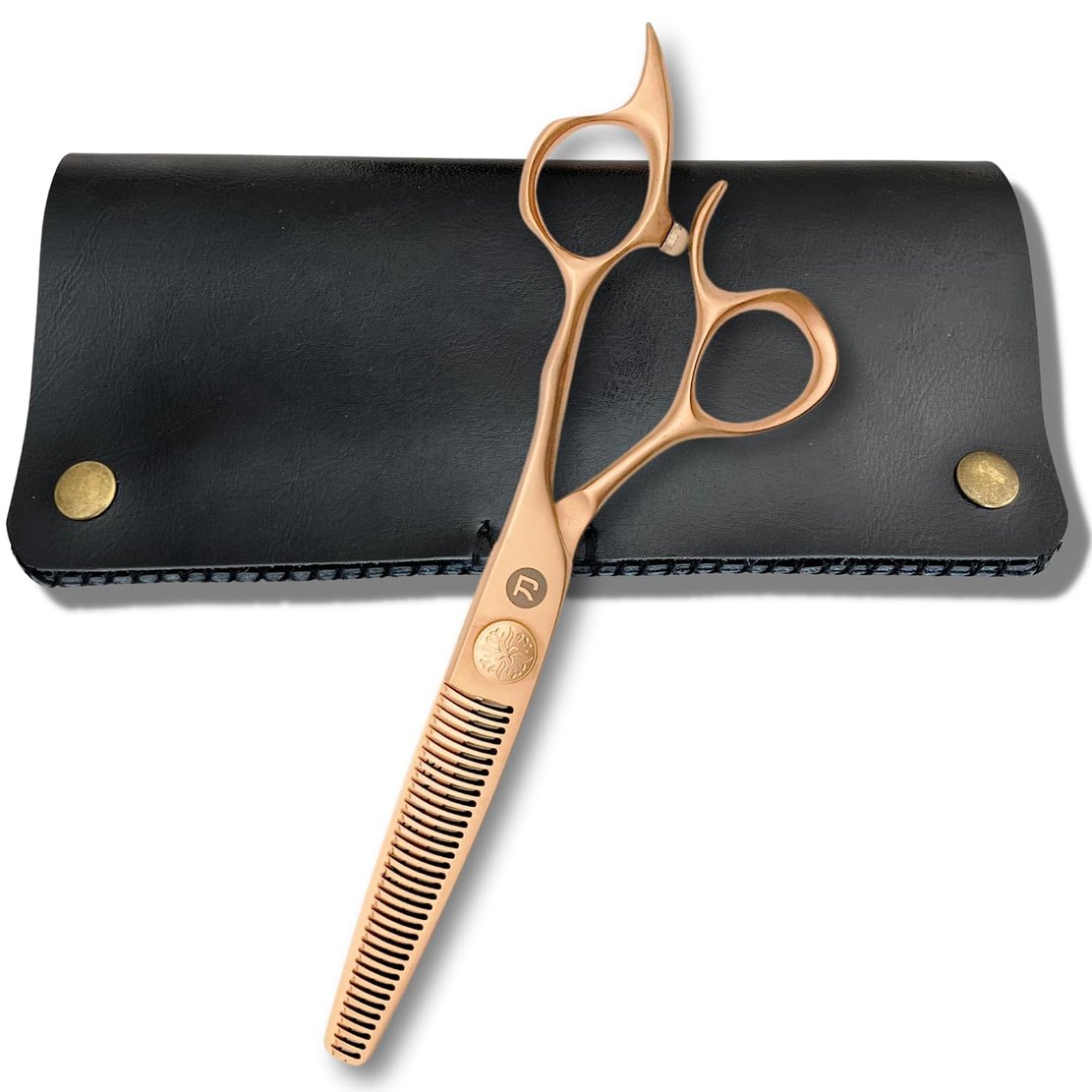
Saki Gold 6" Thinning
VG-10 steel you can keep resharpening, if two hundred dollars sits right.
A sharpener said it plainly in one thread: get a solid steel like VG-10 and you are golden, the badge matters less than the name.
Thirty-five W-shaped teeth take roughly 25 percent a pass, a polishing ratio rather than a chunking one, on a convex edge at 60 to 61 HRC with an adjustable tension screw.
What barbers like
- VG-10 cobalt at 60 to 61 HRC
- 35 W teeth, about 25 percent a pass
- An edge a sharpener can restore
The honest tradeoffs
- Two hundred dollars for one pair
- Barely any reviews, the name spread via free pairs
- Teeth40 / 14 / 7 teeth, 18/50/75%
- SteelStainless steel, offset grip
- Good forPolishing, weight removal, chunking
JW Shears
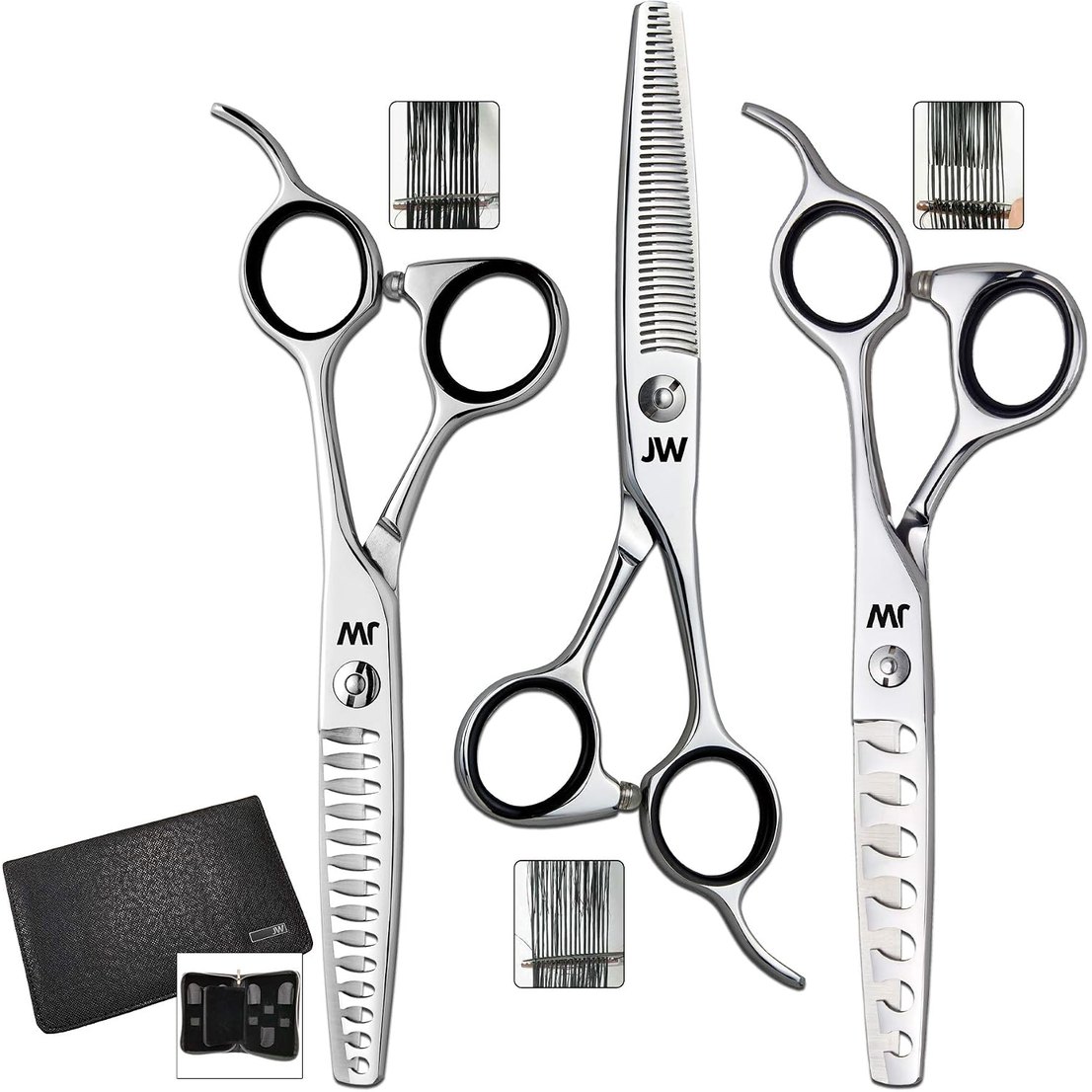
JW Shears TS40 / TS14 / TS7 Trio
Buy once, cover everything. A 40, a 14 and a 7 in one case.
Tooth count decides how much comes out, so owning all three beats guessing: the TS40 polishes at about 18 percent, the TS14 pulls half, the TS7 chunks at 75.
That is how experienced barbers work: fine teeth on a clean fade, the middle shear when a section lies heavy, the chunker only on thick hair.
What barbers like
- Three ratios in one zip case
- 40, 14 and 7 teeth
- Offset grip, permanent finger rest
The honest tradeoffs
- A lot to buy at once for a beginner
- Tiny review count so far
- TeethCutting shear + thinning shear
- SteelJapanese steel, adjustable screw
- Good forA cheap first kit
Equinox
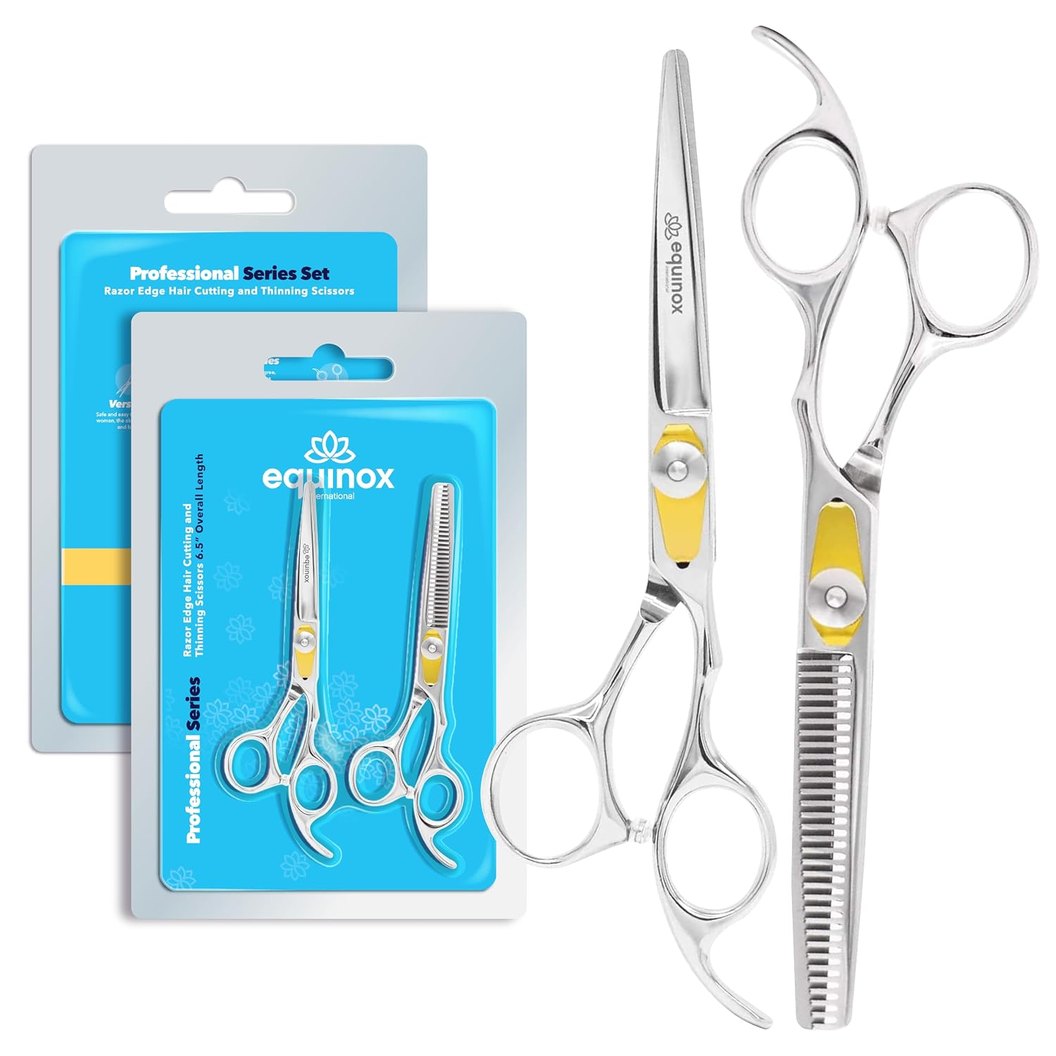
Equinox Razor Edge Series Set
The thirty-seven-dollar set that gets a home kit honestly started.
Two pairs in one pouch, a plain one and a toothed one, hand-forged steel, an adjustable screw, three and a half ounces. That is the whole story.
Equinox sells these as thinning shears for hair cutting at home, which is the honest frame. Sharp enough to learn on, light enough that your hand survives, but the edge is not one a sharpener gets excited about.
What barbers like
- Two pairs under forty dollars
- Light at three and a half ounces
- Adjustable screw for tension
The honest tradeoffs
- Entry-level edge you will outgrow
- Generic teeth, no stated ratio
- TeethSingle-sided teeth, one smooth edge
- SteelPolished steel, rubber inserts
- Good forLearning the motion
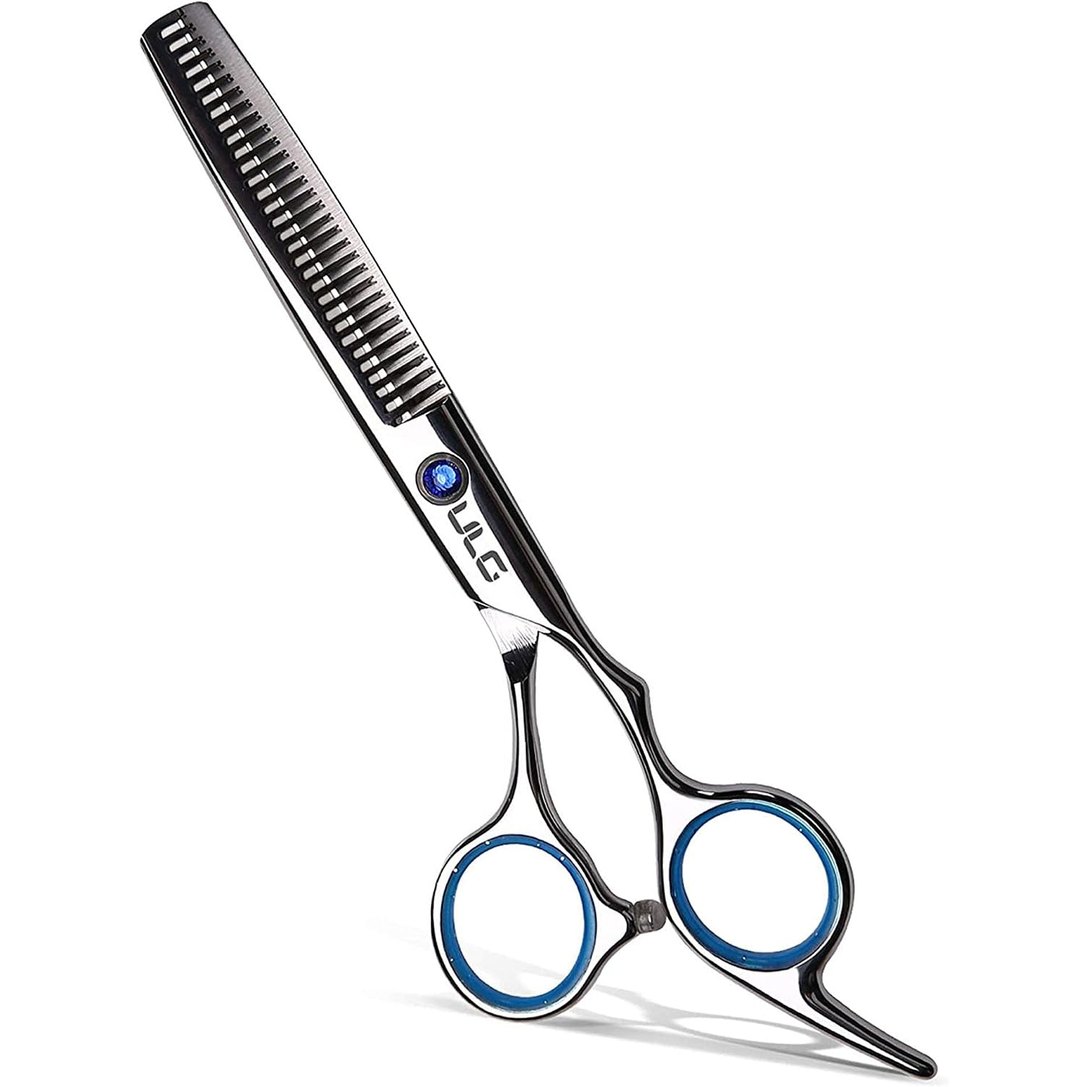
ULG
ULG Professional 6.5" Thinning
Ten dollars, single-sided teeth, an honest way to learn the motion.
Barbers hate what they call Amazon specials and this is one, so we will say it. It is still the shear we would hand a student, because single-sided forgives.
Teeth on one blade, a smooth edge opposite, so less comes off per pass. ULG pitches it for salon and home use, and nineteen thousand buyers at 4.5 stars say the home half is true.
What barbers like
- Ten dollars, no fear of ruining it
- Single-sided teeth take less per pass
- Offset grip, removable rubber inserts
The honest tradeoffs
- An Amazon special, and it feels like one
- Replaced rather than resharpened
How barbers actually pick thinning shears
Strip the marketing and six questions are left, none of them the logo. A sharpener said the quiet part out loud: almost everything comes out of the same few factories, so steel and resharpening beat the badge.
- Tooth count is the dial. More teeth, finer blend, less hair gone per pass, a more precise result. A 40-tooth shear polishes, a 14-tooth pulls half, a 7-tooth chunks.
- Single sided beats double sided for control. Teeth one side, flat edge opposite, less off per pass. Doubles remove more and punish a heavy hand.
- Steel you can bring back. VG-10 holds an edge longer than the cheaper 440c steel a sharpener sees most, so a sixty-dollar VG-10 pair outlives a pricier badge. Precision means how little comes off, durability means how many sharpenings it survives.
- Grip and size. An offset grip drops your elbow and keeps the wrist straight, 5.5 to 6 inches is the barbering range, and a handle you can stand for eight hours beats any finish. A shorter pair buys maneuverability around the ear, and the curve of the grip decides whether an ergonomic claim means anything.
- Names barbers keep naming. Kamisori shears, Joewell and Shark Fin come up over and over in shop threads, none of them in this ranking, and a sharpener warns that professional hair thinning shears and cheap pairs often leave the same factory.
- The names are regional, not technical. Barbering, hairdressing and hairstyling swap between thinning shears, texturizing shears and blenders. Thinning is a misnomer.
Same conclusion barbers reach about machines in the clipper ranking built from the same threads: the tool helps, the hand decides. Nine pairs in a drawer, three see use. Professional thinning shears come down to sharp blades, a durable edge and teeth that suit the work. The right thinning shears for professional use still feel good in hour eight.
I sharpen hair shears for a living and they all come from the same factories in Japan, China, and Germany.
How to use thinning shears without wrecking a haircut
All of this came from barbers describing their own habits, and the pattern never changes: small amounts, on the ends, away from the scalp. Read the client's hair first, decide the amount of hair you want gone, and let the teeth glide through without pulling. With finesse it takes weight out evenly and the next pass runs smoothly. Done blind it leaves harsh lines.
- Polish the fade. Run lightly over the gradient and they glass out the jumps between guard lengths, which decides how clean a skin fade reads.
- Soften the weight line. The shelf where the top meets the fade, especially at the parietal ridge. Scissor over comb with a toothed pair keeps a mid taper from stacking a corner.
- Debulk while keeping length. The most-named job of all. Dense hair that will not lie down loses interior weight and keeps its length. A trimmer debulks too, as our cordless Wahl Detailer test shows, but it loses length.
- Texture the tips, never the roots. Never thin the top near the scalp, because it grows back badly and the client blames you. Hit the tips or deep point cut.
- Skip curly hair. Near unanimous. Teeth cause frizz and break the curl pattern, and a blunt toothed finish flatters no curl.
- Angle and depth change everything. Sliding through the top steers which way it falls. One stylist says clients recognise her work by how much she blends.
Once the blending is done, the outline is where the liners barbers trust for edge work take over.
Thinning shears FAQ
Are thinning and texturizing shears the same thing?
Near enough, the naming is regional. Fewer teeth take more out and leave separation, more teeth give a finer blend. Hair thinning scissors, a hair thinning shear and a blender are the same idea at different tooth counts. Many barbers say blenders, because thinning oversells the job.
Do barbers actually reach for thinning shears?
Many do, and some use them on almost every cut. One said nothing blends out a stubborn cowlick faster. Others never touch them and point cut instead.
What are the drawbacks of thinning shears?
Used badly they thin the top too near the scalp and it grows back a mess. They leave holes, and they tempt you to patch a bad cut.
How many teeth should thinning shears have?
For one pair, barbers keep landing on a 40-tooth shear around 5 inches. It pulls roughly 18 percent a pass, so it is hard to overdo.
Do thinning shears work on curly hair?
Barbers say no, close to unanimously. Teeth cause frizz and interrupt the curl pattern, and the blunt line suits that hair type badly. Point cutting or a thinning razor instead. Fine hair deserves the same caution, because every tooth shows.
Are regular scissors enough?
For most cuts, yes. Regular hair cutting scissors and a bit of point work remove weight and add texture. Any hairdresser will say the same about hair scissors generally: the pair matters less than the hands.
More from the chair
Teeth finish a cut. The machines underneath do the heavy lifting.
The Clippers Barbers Actually Run
The machines behind the fade, ranked on what stays in working drawers.
See the ranking → Gear rankingTrimmers for the Outline
The edge is its own skill. Corded versus cordless, honest tradeoffs.
Read it → ReviewThe Cocco Hyper Veloce, Tested
A graphene edger sharper than most, and what that bite asks of your hand.
Read it →